Winter driving in Norge: tires, chains, and the roads that close
Norwegian law mandates winter tires from November 1. Here is every regulation, every closed mountain pass, and the vehicle you actually need.
Norge closes 30+ mountain passes every winter and fines drivers 8,500 NOK for wrong tires. This guide covers the exact tire laws, chain requirements, seasonal road closures, and which rental car category keeps you moving from October through April.
I spent eleven years in Bergen watching tourists drive off in rental cars with summer tires. In November. Headed for the mountain passes. The phone call from Statens vegvesen always came 4 hours later. Here is everything you need to know so that phone call is not about you.
Winter driving in Norway is governed by specific laws, enforced with real fines, and shaped by a road network that shuts down entire routes for months at a time. Google Maps will not tell you that the Rv55 over Sognefjellet closed in October and will not reopen until late May. This guide will.
The tire law: what Norwegian regulations require
Norwegian traffic law (Forskrift om bruk av kjoretoyet, section 1-4) mandates adequate traction on winter roads. In practice, this means:
| Regulation | Detail |
|---|---|
| Winter tire period | November 1 to the first Sunday after Easter (2027: April 12) |
| Minimum tread depth | 3 mm for winter tires (vs. 1.6 mm summer legal minimum) |
| Studded tires allowed | November 1 to the first Sunday after Easter. Regional variations apply. |
| Studded tire fee | Required in Oslo (2,200 NOK/season), Trondheim (1,650 NOK/season), Bergen (2,000 NOK/season), Stavanger (1,500 NOK/season) |
| Fine for inadequate tires | 8,500 NOK. Police check tread depth and tire type at roadside inspections. |
| Vehicles over 3,500 kg | Must carry chains from November 1 regardless of tire type |
The critical distinction: Norway accepts two types of winter tires. Studded tires (piggdekk) have metal studs embedded in the rubber and provide the best grip on pure ice. Friction tires (piggfrie vinterdekk), also called Nordic winter tires, use a softer rubber compound with a siping pattern designed for snow and cold. Both are legal. Both must carry the Three-Peak Mountain Snowflake (3PMSF) symbol. All-season tires marked M+S but without the 3PMSF symbol do not meet the Norwegian requirement.
Studded vs. friction: which tire for which route
This is not a preference question. It is a route question.
| Driving scenario | Recommended tire | Why |
|---|---|---|
| Northern Norway (E6/E10 north of Narvik) | Studded | Ice forms on coastal roads from October. Temperatures hover around 0°C, creating glaze ice (underkjoelt regn). |
| Lofoten (E10, winter) | Studded | Sea-level ice and black ice on bridges between islands. No margin for error on single-lane sections. |
| Mountain passes (Rv7, Rv52, E134) | Either, with chains in boot | Packed snow above 800 meters. Friction tires perform well on dry snow. Chains required if pass is open but conditions deteriorate. |
| Oslo, Bergen, Trondheim (city only) | Friction | Roads are salted and ploughed. Friction tires avoid the studded tire fee (1,500 to 2,200 NOK per season) and perform better on wet tarmac. |
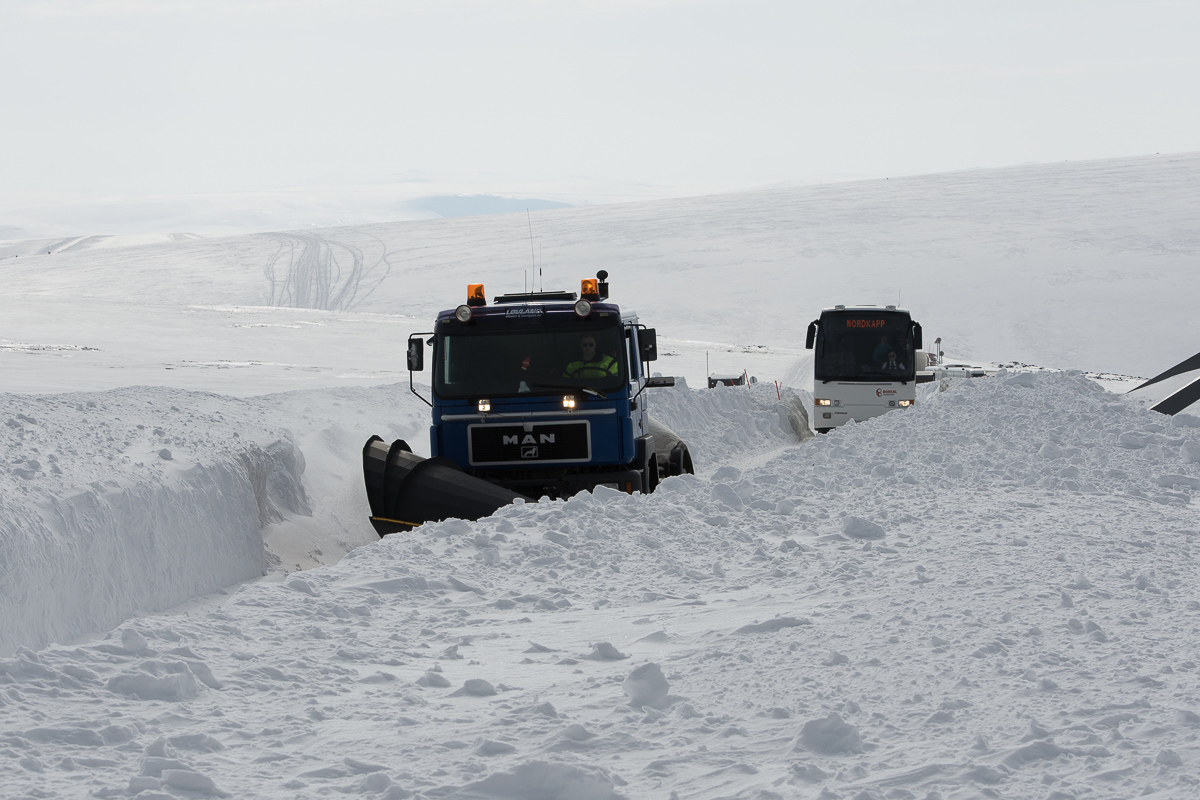
| Finnmark plateau (E6 Tana to Nordkapp) | Studded + chains mandatory | Convoy driving only. Temperatures to -35°C. Wind chill makes roadside stops dangerous. |
Snow chains: when the law requires them
Norwegian law requires vehicles over 3,500 kg (campervans, large SUVs with trailers) to carry chains from November 1 to the first Monday after Easter. Vehicles under 3,500 kg are not legally required to carry chains, but Statens vegvesen (the Norwegian road authority) can close a road to vehicles without chains when conditions demand it.
In practice: If you are driving a rental car over any mountain pass between November and April, carry chains. A set costs 600 to 1,200 NOK from Biltema or any Norwegian auto parts shop. Practice fitting them in a car park before you need them at -15°C on the shoulder of the E134.
Chain fitting areas (kjettingplasser) are signed and located before every major mountain pass. They are gravel pull-offs, not heated garages. Bring gloves. Bring a headlamp. Bring patience.
The roads that close: seasonal pass closures 2026/2027
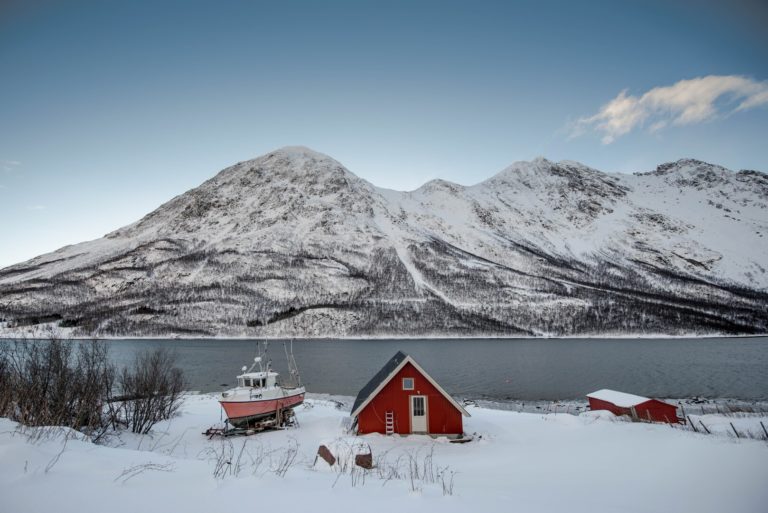
Norway closes over 30 mountain roads every winter. Some close in October and do not reopen until June. Statens vegvesen manages all closures and publishes real-time status at vegvesen.no.
| Road | Route | Typical closure | Winter alternative |
|---|---|---|---|
| Rv55 Sognefjellet | Lom to Gaupne | Late Oct to late May | Laerdal Tunnel (E16), 24.5 km |
| Rv63 Geiranger to Eidsdal | Geiranger | Late Oct to mid-May | E136 via Aandalsnes |
| Rv63 Trollstigen | Aandalsnes to Valldal | Late Oct to late May | E136 via Aalesund |
| Rv258 Gamle Strynefjellsvegen | Grotli to Videseter | Early Oct to mid-June | E39 via Byrkjelo |
| Rv15 Strynefjellet | Stryn to Otta | Intermittent closures Nov to Apr | Convoy system when open |
| Rv7 Hardangervidda | Eidfjord to Geilo | Intermittent closures Nov to Apr | E134 via Haukeli or E16 via Laerdal Tunnel |
| E69 North Cape | Honningsvaag to Nordkapp | Convoy only Nov to Apr | No alternative. Join the snowplough convoy or do not go. |
Check vegvesen.no the morning of your drive. Road status changes overnight. A pass that was open on Tuesday can be closed on Wednesday due to a single storm. The site lists every road by number with real-time status: open, closed, convoy, or restricted.
Which car to rent for winter driving
The vehicle you rent determines whether your winter trip works or fails. This is not about comfort. It is about ground clearance, drivetrain, and tire configuration.
| Route type | Minimum vehicle | Why |
|---|---|---|
| City only (Oslo, Bergen, Trondheim) | Any compact with winter tires | Roads are ploughed and salted. Front-wheel drive is adequate. |
| E6/E39 main highways | Mid-size with winter tires | Well-maintained highways. Wind gusts on coastal stretches demand a heavier vehicle. |
| Mountain passes (E134, Rv7, Rv52) | AWD/4WD with studded tires + chains | Steep gradients on packed snow. Two-wheel drive loses traction on 8%+ inclines. |
| Lofoten (E10, winter) | AWD/4WD with studded tires | Black ice on bridges, single-lane sections with no shoulder, and wind exposure across open water. |
| Finnmark / North Cape | AWD/4WD with studded tires + chains mandatory | Convoy-only roads. Temperatures to -35°C. Engine block heater required at overnight stops. |
When booking a rental car: Confirm in writing that the vehicle will have winter tires fitted. All major Norwegian rental agencies (Hertz, Avis, Sixt, Europcar) fit winter tires from November 1, but independent operators and off-season pickups sometimes miss this. Ask. Verify. Do not assume.
If your route includes mountain passes or anything north of Narvik, book the AWD/4WD category. The price difference is 200 to 400 NOK per day. The alternative is calling a tow truck at 4,500 NOK per callout on a road with no mobile signal.
Need transport in Northern Norway? Browse our verified transport and car rental partners for services in Tromsoe, Bodoe, Alta, and Kirkenes. These operators know the winter roads, carry the right equipment, and run year-round.
The emergency kit you must carry
Norwegian roadside assistance (Viking, Falck) can take 2 to 6 hours to reach you on remote winter roads. Carry this in the boot from October 1:
- Snow chains (fitted to your tire size, practised before the trip)
- Tow rope (rated for your vehicle weight)
- Ice scraper and snow brush (Norwegian law requires all windows to be fully cleared before driving)
- Headlamp and spare batteries (chain fitting in darkness is not optional in December)
- Warm blankets or sleeping bags (one per passenger. If you are stuck for 4 hours in -20°C, the car heater runs out of fuel.)
- Thermos with hot drink and high-calorie snacks
- Fully charged phone and a car charger
- Reflective vest (legally required to be in the vehicle, not the boot)
- Warning triangle
- First aid kit
Fuel discipline
In Northern Norway, fuel stations can be 150 to 250 km apart. Never let the tank drop below half. A closed road or unexpected convoy can add 2 to 3 hours to your route, and idling the engine for heat in a queue burns fuel fast. Fill up at every opportunity north of Narvik.
Driving rules specific to winter
Beyond the tire law, Norwegian winter driving has regulations that visitors from Central Europe, the UK, and North America may not expect:
- Headlights are mandatory 24 hours a day, year-round. This is not a winter rule. It is Norwegian law. Dipped headlights at all times. Your rental car should have automatic daytime running lights, but verify they illuminate the rear as well.
- Clear all snow and ice from the vehicle before driving. Roof, bonnet, windows, lights, and number plates. A slab of ice sliding off your roof onto the windscreen of the car behind you at 80 km/h is a criminal offence, not an inconvenience. Fine: 5,000 NOK.
- Reduce speed to match conditions, not the speed limit. The posted 80 km/h on the E6 assumes dry tarmac. On packed snow, 60 km/h may be the real limit. Norwegian police enforce this subjectively. If you slide, you were going too fast.
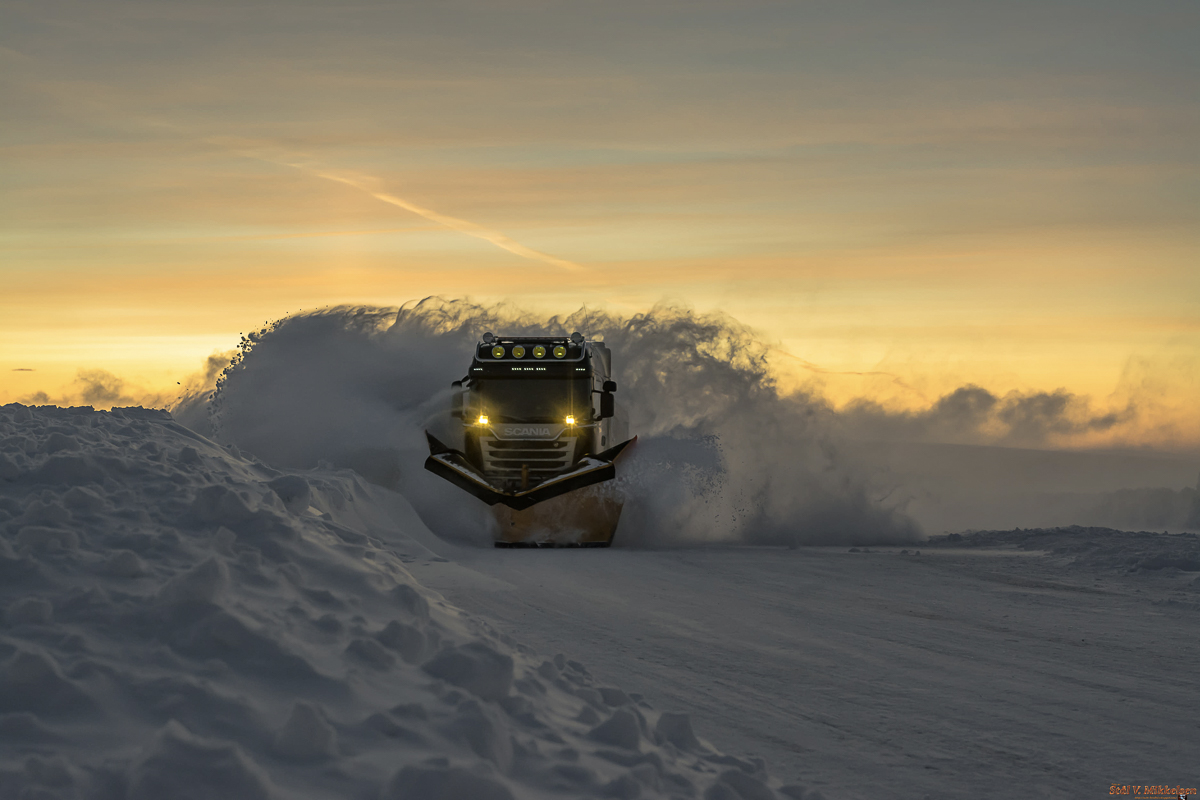
- Give snowploughs absolute priority. When a plough is working, stay behind it. Do not overtake unless the plough driver signals you through. On convoy routes (E69 to North Cape, Rv15 Strynefjellet), you follow the plough. Period.
- Use the road information service. Dial 175 for Statens vegvesen road information (Norwegian and English). Check vegvesen.no before departure. The Yr weather app (yr.no) shows wind and precipitation at road level.
The convoy system: how it works
On high-exposure routes (E69 North Cape, parts of Rv15, Rv52 in storms), Statens vegvesen switches to convoy driving (kolonnekjoring). This means:
- All vehicles wait at a designated collection point
- A snowplough departs at a scheduled time (usually 2 to 4 convoys per day)
- All vehicles follow the plough at 30 to 40 km/h in a single line
- No overtaking. No stopping. No independent driving.
- The convoy can take 2 to 4 hours for a stretch that takes 45 minutes in summer
Convoy schedules are published on vegvesen.no and updated in real time. If you miss the convoy, you wait for the next one. If there is no next one that day, you turn around.
For the E69 to North Cape in winter, the convoy is the only way. You can also book a guided convoy tour with a local operator who knows the road, the timing, and the conditions. Check our Northern Norway transport partners for operators running North Cape winter transfers from Honningsvaag.
What to do if you get stuck
Emergency: 112
If you are stranded in a blizzard, stay in the vehicle. Run the engine for heat in 15-minute intervals (keep the exhaust pipe clear of snow to prevent carbon monoxide buildup). Turn on hazard lights. Call 112 for emergency services or 175 for Statens vegvesen road assistance. Do not walk along the road in whiteout conditions. Vehicles cannot see you and the distance to the next settlement is always further than you think.
Month-by-month: what to expect on the roads
| Month | Conditions | Key hazards |
|---|---|---|
| October | First snow on mountain passes. Mountain roads begin closing. | Black ice at altitude. Summer tires still legal but dangerous above 600 meters. |
| November | Winter tires mandatory from the 1st. All mountain passes either closed or convoy. | Glaze ice on coastal roads. Reduced daylight (6 hours in Tromsoe, 0 in Nordkapp by late month). |
| December to January | Full winter. Polar night above 70°N. Snow-packed roads everywhere. | Complete darkness on northern routes. Moose and reindeer on roads (600+ collisions per winter). |
| February to March | Coldest temperatures. Best road surfaces (packed, dry snow). | Extreme cold in Finnmark (-25°C to -40°C). Engine block heaters essential at overnight stops. |
| April | Spring thaw begins. Most dangerous period for avalanches. | Meltwater on roads. Freeze-thaw cycles create potholes and ice patches at dawn and dusk. |
Resources: check before every drive
| Resource | What it tells you |
|---|---|
| vegvesen.no | Real-time road status, closures, convoy times, webcams at every major pass |
| yr.no | Weather forecasts with wind speed and precipitation at road level |
| varsom.no | Avalanche warnings and flood risk along road corridors |
| Dial 175 | Statens vegvesen road information line (Norwegian and English) |
| NorgeTravel transport partners | Verified car rental and transfer services across Northern Norway |
The bottom line
Winter driving in Norway is not difficult if you respect the conditions and prepare for them. It is difficult if you assume that the rules from home apply here. They do not. Norwegian winter roads are governed by Norwegian law, Norwegian weather, and Norwegian distances. The tire must be right. The chains must be in the boot. The vehicle must match the route. And the phone must show vegvesen.no before you turn the key.
If your route runs through Northern Norway, the smartest move is to book a local operator who already has the right vehicle, the right tires, and 20 winters of experience on the road you are about to drive for the first time.
Ingrid Solheim is the Fjord Logistics Editor at NorgeTravel. She spent eleven years putting tourists into rental cars in Bergen and watching them drive off with itineraries that were never going to work. Her guides are written so that does not happen to you. She can be reached at hei@norgetravel.com.
Plan your Norway itinerary
Use our free, interactive trip planner to map out your route through Norway, book verified eco-friendly cabins and transport, and sync with local ferry timetables.
Up Next: Keep Exploring
The Mountain Code: 9 rules every hiker in Norge must follow
Every year, Norwegian rescue teams retrieve hikers who treated the Fjellvettreglene as optional. The Mountain Code is nine rules built from decades of mountain rescue operations. Learn each one before you lace up your boots.
What to pack for Arctic Norge, month by month
Arctic Norge is not one climate. It is eleven distinct packing problems spaced across the year. The temperature range from January in Longyearbyen to July in Tromsø is over 40 degrees Celsius. A field-tested, month-by-month packing guide from 25 years of Arctic guiding.
Allemannsretten explained: your rights and obligations
Allemannsretten lets you hike, ski and camp on land you don’t own. It also sets hard limits: 150 meters from houses, two nights per spot, and no fires in or near forest from 15 April to 15 September. Here’s what the law actually says.