Sørlenangsbreen: the guided glacier approach on the Lyngen peninsula
A glaciated objective on the north end of the Lyngen Alps. Rope team, harness, crevasse rescue. Guide mandatory unless you have alpine experience. This is the real Lyngen.
Sørlenangsbreen is the glaciated north end of the Lyngen range, accessed from the Lenangen side of the peninsula. 12 km round trip, 950 m of gain, 7 to 8 hours, crevassed glacier terrain. Not optional: rope team, harness, and crevasse rescue skills. Book a certified guide.
Glacier objective. Guide mandatory.
Sørlenangsbreen is a crevassed glacier. A solo crossing without rope-team experience and crevasse rescue practice is not a hike. It is a fatal accident waiting for conditions to align. Book through a certified Lyngen operator. Fjellvettreglene Rule 5 is the rule of law here.
Sørlenangsbreen sits at the north end of the Lyngen range, a crevassed glacier that drops from around 1,400 metres to 900 metres on the east aspect. It is one of several glacier objectives that separate Lyngen from its neighbouring ranges. Most Lyngen visitors never set foot on a glacier, because the non-glaciated peaks around Lyngseidet are enough. The travellers who do come for Sørlenangsbreen are either booked with a certified guide or have genuine alpine experience they are transferring in.
This guide is written to help you make the right decision about whether this objective belongs in your Lyngen week, and to brief the conversation you will have with a local guide if you decide it does.
The honest grade
This is not a DNT-graded hike. DNT does not grade glaciated terrain beyond Sort (black, expert alpine). Sørlenangsbreen is a Level 2 to Level 3 glacier crossing depending on the season and the route chosen. It is the bread-and-butter of guided Lyngen alpine weeks, not a self-led objective for visitors without a roped-team background.
In a normal spring, the glacier is covered in snow that bridges the crevasses. This is the window when most guided ascents happen: late March through May. By midsummer the bridges weaken and the route becomes technically easier but navigation-wise harder. In autumn the glacier is dry ice with exposed crevasses. Few parties cross it at that stage.
Why a guide is mandatory
Four specific risks make this route a guided objective:
- Crevasses. Sørlenangsbreen has known crevasse fields on the lower and middle sections. Hidden crevasses under snow bridges are the classic glacier fatality. A solo traveller who falls into a crevasse will die there.
- Rope-team movement. A two or three-person rope team with proper spacing, coordinated pacing, and the ability to execute a Z-pulley crevasse rescue under load is a skill set that takes multiple training days to acquire. It cannot be learned from a video.
- Route finding. The safe line across a glacier shifts season to season. Local guides know which fields close by May and which bridges to avoid in July.
- Rescue response time. Lyngen is remote. The Norwegian Red Cross rescue helicopter based in Tromsø is the nearest response, and weather grounds it frequently. A guided team's ability to self-rescue is the difference between a bad day and a fatality.
Who runs guided ascents
- Magic Mountain Lodge (Lyngseidet). Runs guided glacier days as part of week-long ski-touring programmes. Certified IFMGA guides on staff.
- Lyngen Lodge (Djupvik). Similar guided programme, boat access from the west side of the fjord.
- Mountain Tracks, 57hours, Elemental Adventure. International operators who run dedicated Lyngen alpine weeks with IFMGA or UIAGM guides.
- Local IFMGA-certified guides. Bookable directly for day trips if you have the prior experience to make that case.
Expect a day-rate of 4,500 to 6,500 NOK per person for a small group, or 12,000 to 16,000 NOK for a private guide with one or two clients. This is not a cheap objective. It is a correct objective.
What a guided day looks like
Morning brief. Guide reviews the varsom.no forecast, the meteorological outlook, and the chosen line. Equipment check: harness, rope, crampons, ice axe, transceiver (in ski season), helmet.
Approach (2 to 3 hours). From the Lenangen trailhead on the north end of the Lyngen peninsula, the approach climbs through birch and onto the moraine below the glacier tongue. Approximately 500 metres of gain before the ice.
Rope-up (30 minutes). At the glacier edge, the team ties in, discusses pacing and spacing, and reviews the signal set for a suspected crevasse fall.
Glacier crossing (2 to 3 hours). Roped travel across Sørlenangsbreen on the chosen line. Pacing is set by the guide.
Descent (2 hours). Reverse the approach or, on a ski-touring day, ski the glacier and the lower flanks back to the trailhead.
The turn-back rule (guided)
On a guided day, the guide owns the turn-back decision. You should also know what the triggers are:
- Temperature rise above 0°C at glacier elevation before midday. Snow bridges weaken rapidly.
- Fresh snowfall of 20 cm or more in the previous 24 hours. New snow hides old crevasses and loads lee slopes.
- Visibility below 200 metres on the glacier. Route finding becomes guesswork.
- Wind above 15 m/s at glacier level. Standing rope-team communication becomes difficult.
Fjellvettreglene on this route
- Rule 1: Plan and communicate your route. The guide files the plan. You confirm it.
- Rule 5: Travel rope-linked in glacial terrain. This is the rule of law here. Non-negotiable.
- Rule 3: Pay attention to weather and avalanche forecasts. The guide checks varsom.no, yr.no, and met.no that morning.
- Rule 8: Turn back in time. On a glacier, turn-back is not a failure. It is the correct reading of conditions.
The logistics
| Detail | Information |
|---|---|
| Glacier high point | Approximately 1,400 m on the standard guided line |
| Distance | 12 km round trip |
| Elevation gain | 950 m |
| Time | 7 to 8 hours, guided |
| Grade | Glaciated alpine. Rope team mandatory. Guide mandatory for non-alpinists. |
| Season | Late March through early July is the stable snow-bridge window. |
| Trailhead | Lenangen, north end of the Lyngen peninsula, Rv91 / Rv868 |
| Access | Via Lyngseidet by road, 45 minutes north |
| Guide day rate | 4,500 to 6,500 NOK per person in a small group. 12,000 to 16,000 NOK private. |
| Avalanche forecast | varsom.no, region: Lyngen |
| Rescue | Norwegian Red Cross, helicopter Tromsø. 112 (police/rescue), 113 (medical). |
Who should do this route
- Clients on a guided Lyngen alpine week. This is one of the signature days.
- Alpine skiers or mountaineers with prior glacier-travel training. Even with experience, a day with a local guide for route knowledge is a good call.
- Photographers travelling with an IFMGA guide for access. The glacier terrain gives a specific landscape that the fjord-side peaks do not.
Who should skip this
- Anyone without roped-team training. Book the Goalsevárri or Rørnestinden objective instead. You will not miss the essence of Lyngen by skipping the glacier.
- Solo travellers. Solo glacier travel in Lyngen is a line that local guides refuse to cross, and for correct reasons.
- Visitors on a tight budget. The guide fee is the right cost for the risk. If the cost is wrong for your trip, the objective is wrong for your trip.
Marte Åsheim is the Mountain Safety Editor at NorgeTravel. DNT-certified guide with 18 years of experience across Jotunheimen, Rondane, and the Nordic peaks. She writes trail guides so that you come home afterward. She can be reached at hei@norgetravel.com.
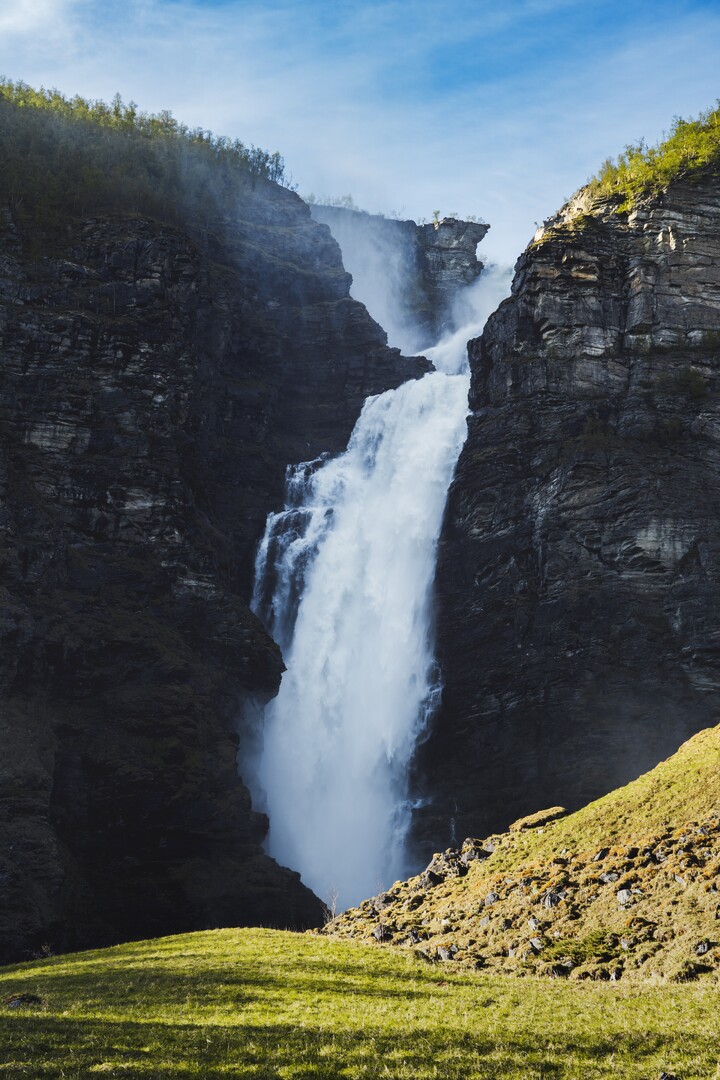
Image: Lyngen Alps panorama by Petr Pavlíček, provided by Visit Lyngenfjord.
Plan your Norway itinerary
Use our free, interactive trip planner to map out your route through Norway, book verified eco-friendly cabins and transport, and sync with local ferry timetables.
Up Next: Keep Exploring
RIB Fjordsafari Geirangerfjord: what the cruise ship cannot show you
The RIB Fjordsafari puts you 15 meters from the Seven Sisters waterfall at 35 knots. Here is exactly what works, what does not, and whether the 895 NOK price tag is justified.
Kayaking beneath the Seven Sisters: 4 hours on Geirangerfjord at paddle height
The Geiranger kayak tour puts 8 paddlers beneath the Seven Sisters waterfall at arm's reach from the cliff wall. 4 hours, 1,550 NOK, drysuits provided. Here is exactly what the experience delivers and who should book it.
Geiranger by car: Eagle Road, Flydalsjuvet, and Dalsnibba in one drive
The Eagle Road climbs 620 meters in 11 hairpin bends. Dalsnibba sits at 1,476 meters with the fjord as a thin blue line below. Here is how to drive both in a single day without fighting the tour buses for parking.