Norway ferry guide 2026: schedules, AutoPASS, and booking
Car ferry or express boat, how AutoPASS and FerryPay charge you, which crossings need a booking, and what to do when the boat is full.
Most Norwegian ferries run like buses and take no bookings. A few don’t. Here’s how payment works for Norwegian and foreign cars, which crossings to book in 2026, and who now runs the Geiranger–Hellesylt ferry.
In western and northern Norway, the ferry is part of the road. On the E39 between Stavanger and Bergen you cross fjords on boats that run like buses, and nobody books them. A handful of routes work differently: they fill up, they sail a few times a day, and they will leave you on the dock if you assumed otherwise. This guide covers how payment works, which crossings need a booking, and what to do when the boat is full.
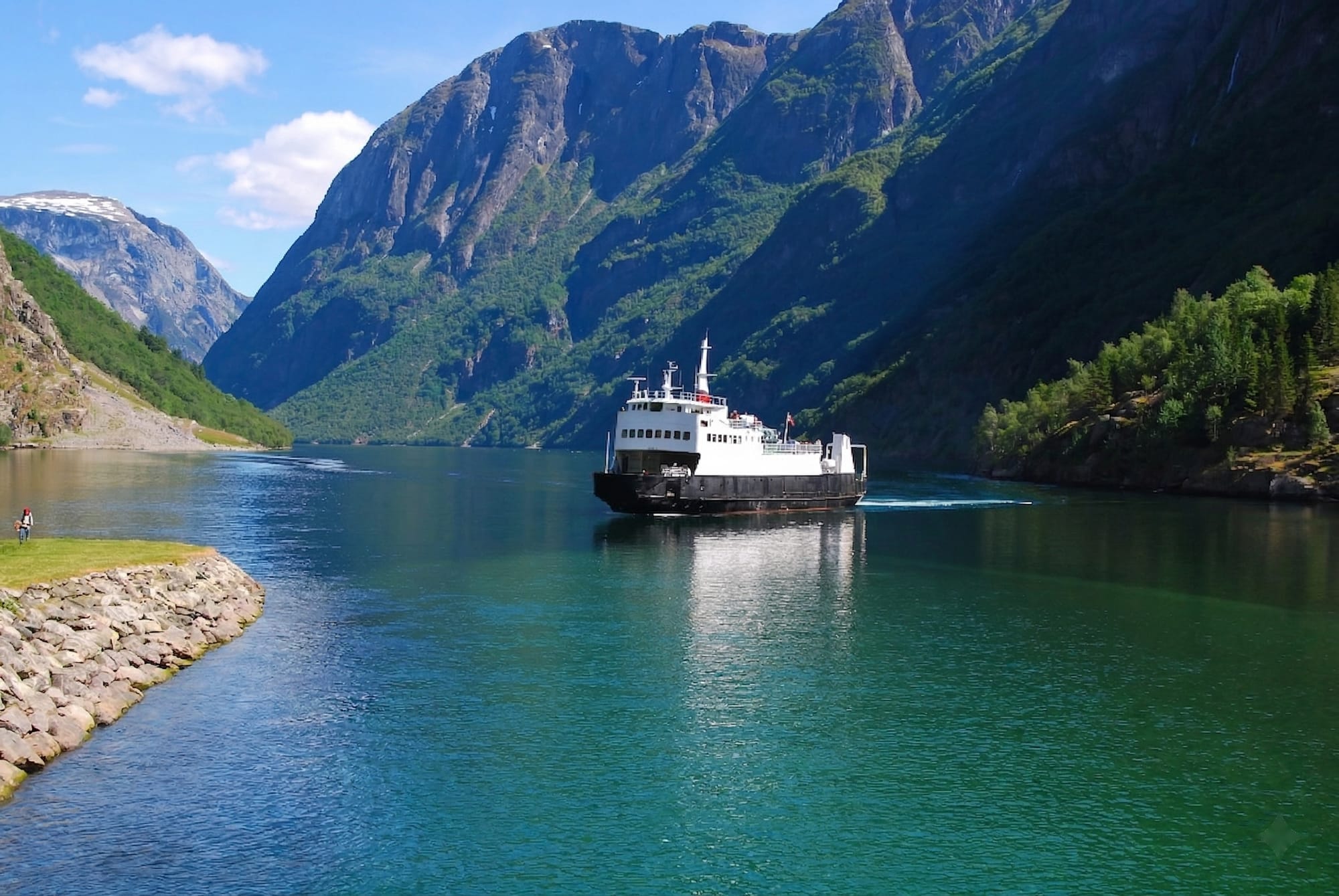
Car ferry or express boat
Norway runs two kinds of boat, and confusing them ruins itineraries.
- Car ferry (ferje): takes vehicles and passengers. This is what you need with a car.
- Express boat (hurtigbåt): passengers only. Fast, but it will not take your car.
How you pay
Most ferries in the AutoPASS for ferry scheme read your number plate or toll tag as you drive on, so you rarely buy a ticket at a booth. What you pay depends on what you have set up before the trip.
| Setup | What you pay | Good for |
|---|---|---|
| AutoPASS ferry prepayment agreement | 50% off for private customers (40% for businesses), drawn from a balance you pay in advance | Many crossings in one trip |
| AutoPASS tag registered for ferry, no prepayment | 10% off, billed through your tag issuer | Cars that already have a tag |
| FerryPay | Full fare, charged to your card automatically from the plate | Foreign-registered cars without a tag |
| Nothing set up | Full fare, paid by card to the crew on board | One or two crossings |
Zero-emission cars pay half the fossil-car fare on the state road ferries (riksvegferjer) in 2026. County ferries set their own rules, so check the route's price list. With a rental car, ask the company how ferry and toll charges are passed on before you sign.
When you need to book
Most short crossings take no bookings at all: you queue and board in order. Book ahead on long and tourist routes, especially from May to September.
- Bodø–Moskenes (Lofoten): only half of the capacity can be reserved, and the booking fee is 130 NOK for a car up to 6 metres. In peak season, cars without a booking can be left behind.
- Geiranger–Hellesylt: Fjord1 no longer sails this route. In 2026 the car ferry runs from 1 May to 15 December under Fjord X, sold through Fjord Tours, and it sells out in July and August. Check the operator before you trust an older timetable.
- Any route marked "reservation recommended": the operator means it. Treat it as required in July.
Crossings you are likely to use
| Crossing | Operator | Crossing time | Book? |
|---|---|---|---|
| Lavik–Oppedal (E39) | Fjord1 | About 20 minutes, every 15 minutes in the daytime, half-hourly in the evening | No |
| Halhjem–Sandvikvåg (E39) | Torghatten | 40 to 45 minutes | No |
| Bodø–Moskenes | Torghatten Nord | 3 hours 15 minutes to 3 hours 45 minutes | Yes, with a car |
| Bodø–Svolvær express boat | Torghatten Nord | About 3.5 hours, passengers only | Recommended in summer |
| Geiranger–Hellesylt | Fjord X (sold via Fjord Tours) | About 1 hour 5 minutes; 1 May to 15 December 2026 | Yes, July and August |
Queues, full boats and the fallback
Google Maps has never waited in a ferry queue. In July, add the queue to every crossing on your route, not just the sailing time. Arrive early for the departure you need, follow the lane markings at the quay, and do not leave the queue: the line moves when the ramp drops.
If the boat fills in front of you, you wait for the next departure. On a route with sailings every 15 minutes, that costs a coffee. On Bodø–Moskenes it can cost half a day, so book, and know the express boat and the Bodø–Svolvær flight as your fallback. [WINTER] Timetables thin out and exposed crossings cancel in bad weather. Check the operator's service messages before you drive to the quay.
Then go up to the lounge. On the ferries along the Vestland coast, the kiosk sells svele, a thick, soft pancake folded around butter and sugar or a slice of brown cheese (brunost). You will not find a better twenty minutes on the E39.
Ingrid Solheim is the Fjord Logistics Editor at NorgeTravel. She spent eleven years putting tourists into rental cars in Bergen and watching them drive off with itineraries that were never going to work. Her guides are written so that does not happen to you. She can be reached at hei@norgetravel.com.
Sources: AutoPASS-ferje (discounts and agreements); Svipper (FerryPay); Fjord1 (Lavik–Oppedal timetable); Fjord Tours (Geiranger–Hellesylt 2026 season); Torghatten and Torghatten Nord; NAF (2026 national budget, ferry fares for zero-emission cars). Checked October 2026.
ノルウェー旅行のプランを立てる
無料のインタラクティブなトリッププランナーで、ノルウェーのルートを計画し、認証済みのエコフレンドリーな宿泊と交通を予約し、現地のフェリー時刻表を確認できます。
Up Next: Keep Exploring
DNT cabin guide: how the hut system works, keys, and booking
DNT runs more than 600 mountain cabins, from staffed lodges that cook your dinner to locked huts where you carry in every meal. Here’s how to get the 100 NOK key, what a night costs in 2026, how booking works and the rules every guest follows.
Bergen to Lofoten: every route compared (fly, drive, ferry, Hurtigruten)
Svolvær is about 1,570 km from Bergen by road. Here are all five ways to get there, from flights via Bodø to the Hurtigruten, with the Bodø–Moskenes ferry rules to know before you go.
How much does Norway cost? A real budget breakdown by region
A beer costs 112 NOK in an Oslo bar and 33 NOK in a shop. Here’s what hotels, meals, ferries and mountain cabins actually cost in Norway, region by region, with sources.