Allemannsretten(挪威公共通行权)解读:您的权利与义务
公共通行权并不等于随处都能露营。150 米规定、夏季用火禁令和罗弗敦的地方禁令,全部依据法律原文。
Allemannsretten 允许您在不属于自己的土地上徒步、滑雪和露营,同时也设有硬性限制:距离房屋至少 150 米,同一地点最多两晚,4 月 15 日至 9 月 15 日禁止在森林内或附近生火。以下是法律的真实规定。
Norway lets you walk, ski and sleep on land you don't own. Visitors hear that, then pitch a tent in a farmer's hay meadow or light a fire in a dry pine forest in July. Both break the law. Allemannsretten (the right to roam) is a legal right, and its limits are just as legal.
The rules sit in the Outdoor Recreation Act of 1957 (friluftsloven). They apply to everyone on Norwegian land, resident or visitor, and the core of them fits on one page. Read that page before you pack the tent.
Infield or outfield: the line that decides everything
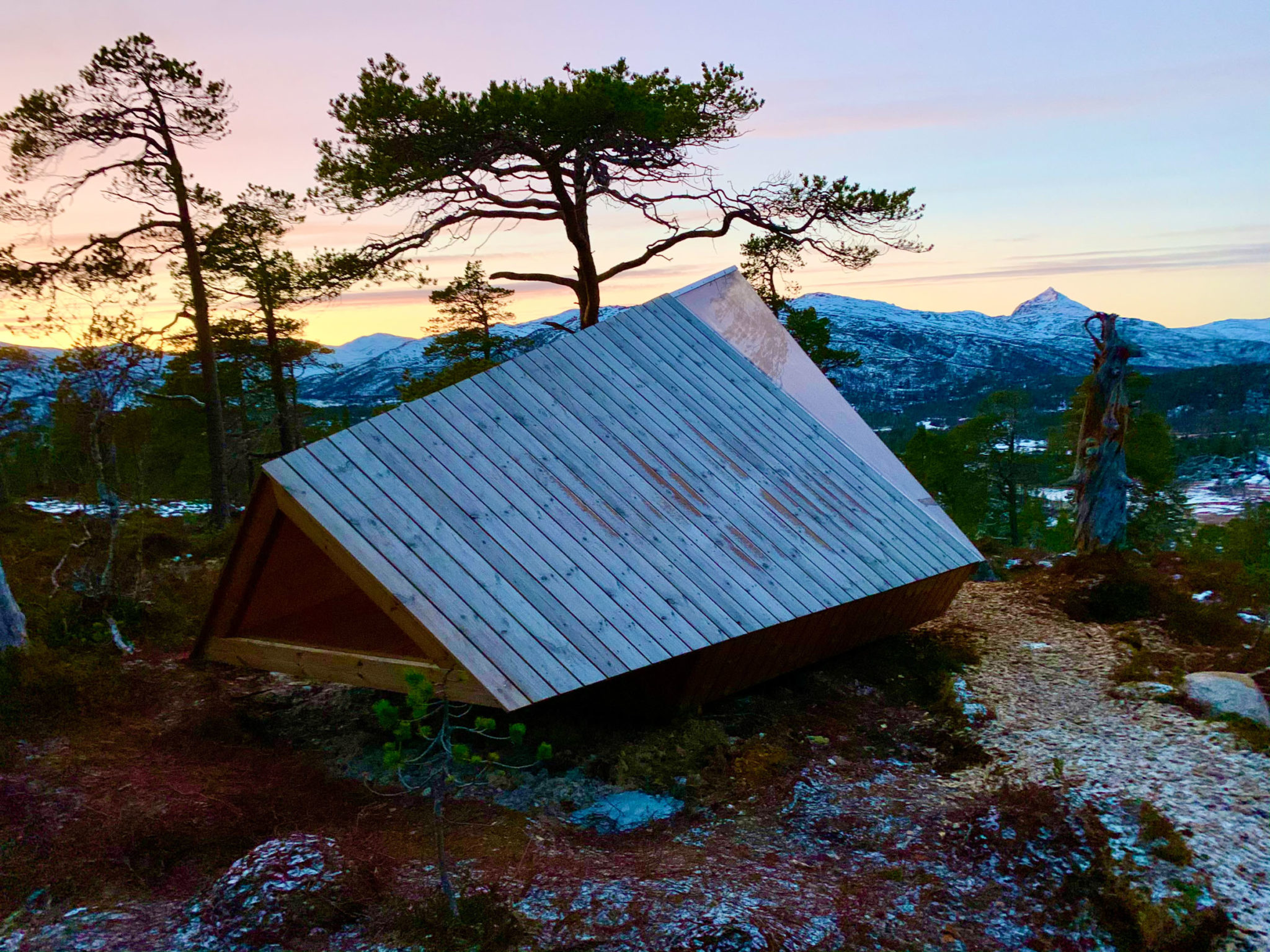
The act splits all land into two categories. Your rights depend on which one you're standing on.
Infield (innmark): farmyards, house plots, cultivated fields, hay meadows, cultivated pasture and similar land where your presence would be a nuisance to the owner. You may not camp here without permission. You may cross infield on foot only when the ground is frozen or covered in snow, and never between 30 April and 14 October.
Outfield (utmark): all uncultivated land. Mountains, forest, bog, moorland and most of the shoreline. This is where allemannsretten applies. You can hike, ski, swim, land a kayak and camp here, as long as you move with care and leave nothing behind.
Can't tell which one you're on? Mown grass, fences, tractor tracks and a house in sight all mean someone farms this land. Treat it as infield and walk on.
The 150-meter rule and the two-night limit
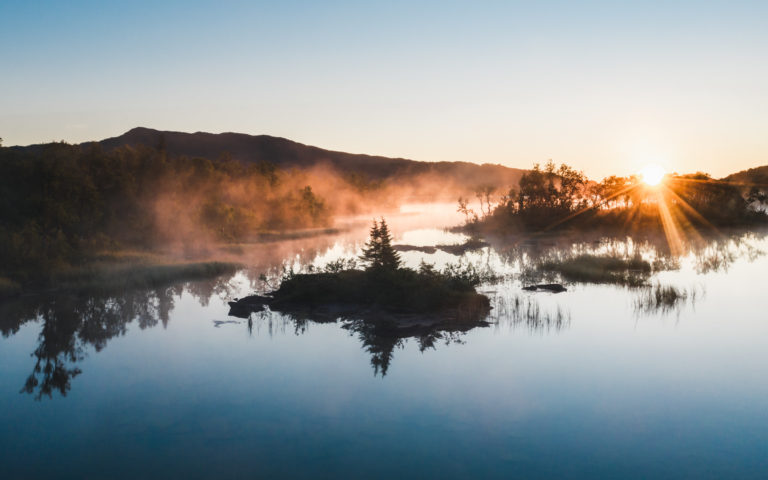
- Distance: Pitch your tent at least 150 meters from any inhabited house or holiday cabin (hytte). The law also says you must not disturb the people living there, so 150 meters is the floor, not the target. Treat a hammock or bivvy bag the same way.
- Duration: You can stay up to two nights in the same spot without the landowner's consent. Beyond that, ask. The limit lifts in the high mountains and in areas far from settlement, unless your camp causes real damage.
- Conduct: The act requires you to act considerately and with care. Close gates behind you, give grazing animals a wide berth, and keep your dog on a lead from 1 April to 20 August, when Norway's national leash rule applies.
Fire: banned from 15 April to 15 September
From 15 April to 15 September you may not light a fire in or near forest or other outfield without the municipality's permission. The ban comes from Norway's national fire prevention regulation, and it covers campfires and disposable grills alike. The one exception: places where a fire obviously cannot spread, such as bare sand or rock at the water's edge, or a wide snow-covered surface.
In dry spells, municipalities and fire services can ban every fire outright, including at designated fire pits (bålplass). Breaking a fire ban is a criminal offence. You pay the fine, and you're liable for the damage. Pack a gas stove and you won't need a fire at all.
Waste, toilets and water
Pack out everything you carry in, including toilet paper and food scraps. Orange peel and banana skins break down slowly in cold northern soil and stay on the ground long after you've gone home. Dig a hole 15 to 20 cm deep for human waste, at least 50 meters from streams and lakes, and fill it in. Wash dishes away from the water you drink from, not in it.
Local camping bans: Lofoten leads the way
The act lets municipalities set extra rules where outdoor traffic is heavy. In 2021 the Lofoten municipalities adopted a joint outdoor regulation (friluftsforskrift for Lofoten) after tents and campervans wore down beaches and viewpoints. Its bans:
- Year-round camping ban: Haukland beach in Vestvågøy.
- Camping ban from 1 May to 1 October: Stranda under fjellet and parts of Kalle and Rørvika in Vågan. Reinebringen, Reine, Olenilsøya, Andøya, Vindstad, Tennes and Veines, Bollhaugen, Sørvågvatnet and Langhaugen in Moskenes.
- Campervans: no overnight parking between 24:00 and 06:00 at named sites in Værøy and Vågan.
Signs mark the zones. Break the rules and you can be reported to the police and removed from the area. Outside the zones, the national 150-meter and two-night rules apply. Other heavily visited municipalities can adopt similar rules, so read the sign at the trailhead parking before you unpack.
Berries, mushrooms and the cloudberry exception
In outfield you can pick wild berries, mushrooms and wildflowers and take them home, as long as the plant isn't a protected species. The exception is cloudberries (multer) in Nordland, Troms and Finnmark. There, the landowner can ban picking on cloudberry land. Even under a ban, you may always eat cloudberries where you pick them.
The rules at a glance
| Activity | Where it's allowed | The limit |
|---|---|---|
| Hiking and skiing | Outfield, year-round. Infield only on frozen or snow-covered ground | Never on infield from 30 April to 14 October |
| Camping | Outfield | At least 150 m from inhabited houses and cabins. Two nights per spot, except in high mountains or far from settlement |
| Fires | Outside the summer ban, with care | No fires in or near forest and outfield from 15 April to 15 September without municipal permission |
| Berries and mushrooms | Outfield | Cloudberries in Nordland, Troms and Finnmark: the landowner can ban picking, but you may eat them on the spot |
| Local bans | Lofoten (2021 regulation) and other signed areas | Marked zones. Haukland year-round, most others 1 May to 1 October |
Allemannsretten survives because most people who use it leave no mark. Camp so the next hiker can't tell you were there, and the right stays open for everyone.
Marte Åsheim is the Mountain Safety Editor at NorgeTravel. She has spent 18 years guiding in Jotunheimen and Rondane, based in Lom. She has zero tolerance for campers who leave waste or ignore fire bans. She can be reached at hei@norgetravel.com.
Sources: Friluftsloven (LOV-1957-06-28-16) §§ 1a, 3, 5, 9, 15 and 39; Forskrift om brannforebygging § 3; Hundeloven § 6; Friluftsforskrift for Lofoten (FOR-2021-06-22-2418). Checked October 2026.
规划您的挪威行程
使用我们免费的互动行程规划工具,设计您的挪威路线,预订经过验证的环保木屋和交通,并同步当地渡轮时刻表。
Up Next: Keep Exploring
挪威山区守则:徒步旅行必须了解的9条规则
在挪威的山区,大自然制定了规则。这是您在踏上小径前需要了解和尊重的官方挪威山区安全准则(Fjellvettreglene)。
挪威冬季驾驶:轮胎、雪链和封闭道路
挪威每年冬季会关闭30多条山路通道,并对使用错误轮胎的司机处以8500挪威克朗的罚款。本指南涵盖了精确的轮胎法规、雪链要求、季节性道路封闭,以及哪种租车类别能让您在10月到4月期间畅通无阻。
挪威北极地区每月打包指南
挪威北极地区并非只有一种气候,它涵盖了一年之中十一种截然不同的打包挑战。从朗伊尔城一月到特罗姆瑟七月的温差超过40摄氏度。这份经过25年北极向导实地测试的月度打包指南将为您提供帮助。